

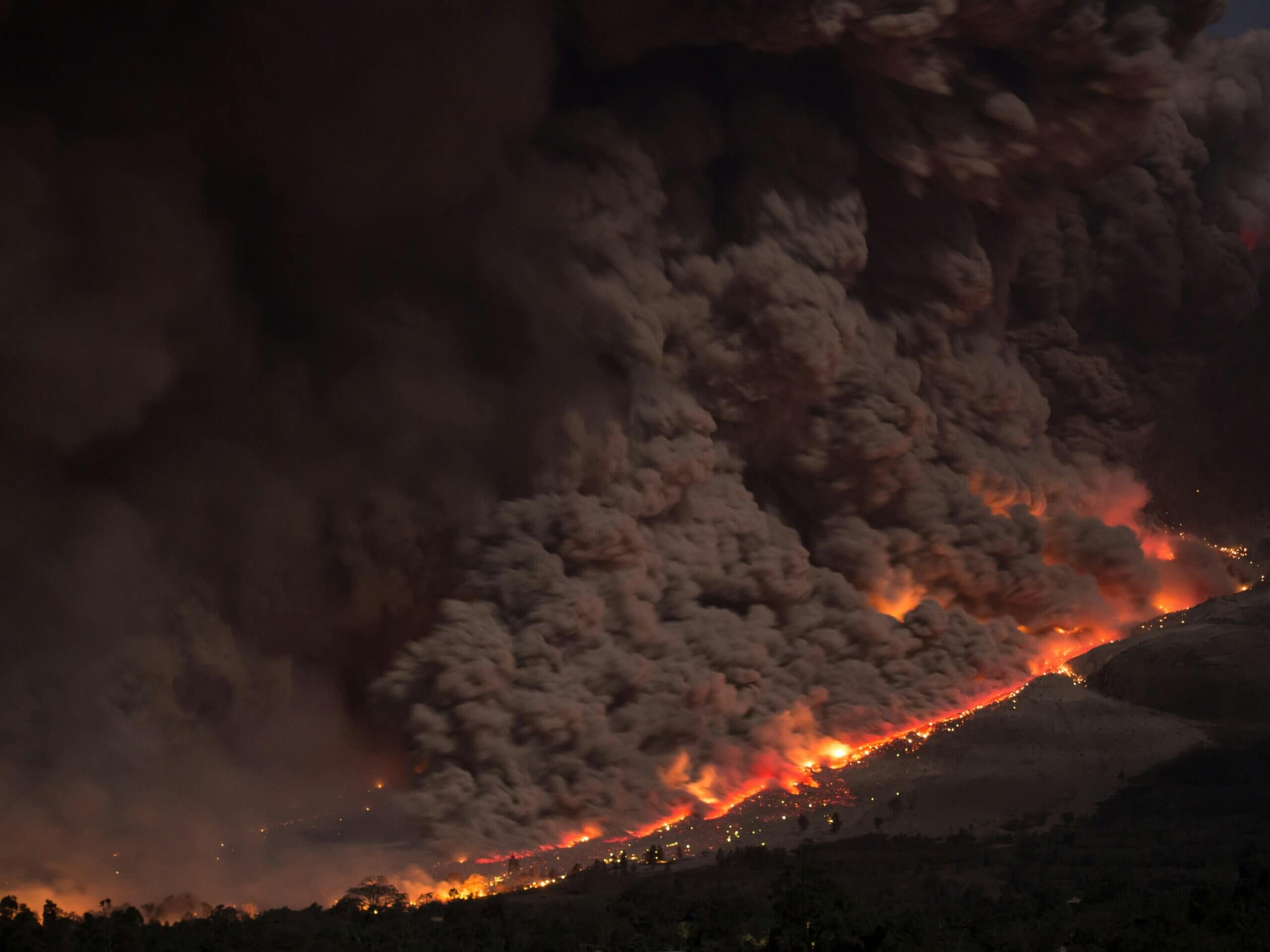
Have you noticed that when the skies are filled with smoke, your energy drops, you have a hard time focusing and you just can’t get motivated? I’m going to tell you why…
But if that’s not you, and even if you feel fine when the air turns bad, keep reading anyway. Because whether or not you feel it, your health can be severely impacted by smoke.
But first, we need to give some context for understanding the research. When it comes to studying smoke and air pollution, scientists refer to particle size.
Why? The particle size determines exactly how much damage it can do. Particles between 2.5 and 10 microns, called PM10, mostly get stopped in your nose and throat. Annoying and irritating, but your body has defenses for that.
Fine particles, PM2.5, are 2.5 microns or smaller, and this is where things get dangerous. They’re small enough to slip past those defenses and lodge deep in your lungs. Fire smoke is made almost entirely of them. PM2.5 accounts for roughly 90% of the total particle mass in wildfire smoke, far more than you’d find in typical car exhaust or industrial pollution.
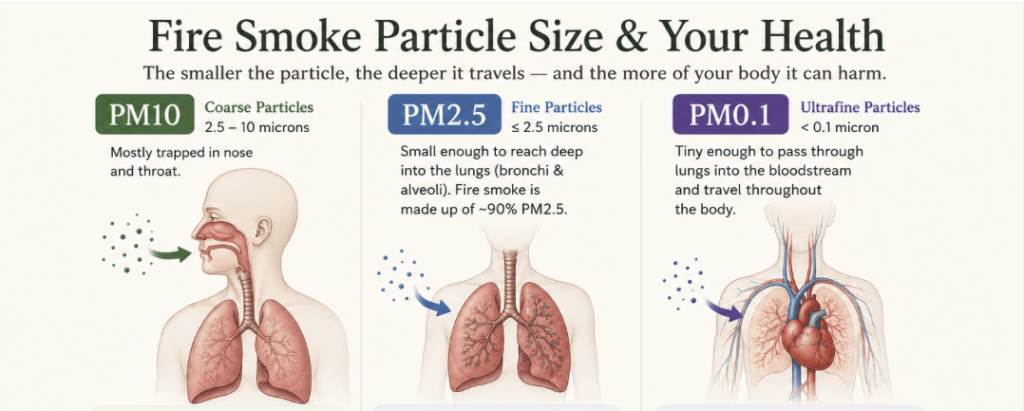
Then there are ultrafine particles, smaller than 0.1 micron, so tiny they don’t even get stopped by your lungs. They pass straight through lung tissue into your bloodstream and circulate through your body the same way oxygen molecules do. Once they’re in your blood, they can reach your heart, your brain, any organ at all.
The smaller the particle, the deeper it travels, and the more of your body it touches on the way. And forest fires in particular skew smaller and more concentrated in PM2.5 than most other pollution sources, which is part of why the health data on wildfire smoke keeps coming back worse than the data on everyday urban air. Keep that in mind as you read the research below.
How Smoke Impacts Our Health
Years ago I wrote about how air pollution damages the brain, the ultrafine particles, the oxidative stress, the way ordinary traffic and city pollution quietly raise our risk of dementia and cognitive decline. If you haven’t read my article, please do, as this article is an update to what I covered then.
What I didn’t mention was fire smoke specifically, and the research on that has expanded. Fire smoke is now being extensively studied as it’s own category of pollution.
Researchers analyzing more than 10,000 people found that attention scores dropped by an average of 3.7% during high PM2.5 days, with the steepest effects showing up within the first three hours of exposure and lingering for up to two days.
On days with dense wildfire smoke, researchers have documented a 42% jump in ER visits for heart attacks, a 22% jump in ischemic heart disease visits, and a 22% jump in heart failure visits. A national Medicare study following 22 million older adults found that long-term exposure to PM2.5 from wildfire smoke raised the risk of heart failure more than the same amount of PM2.5 from everyday sources like traffic. Women and people with the fewest resources to protect themselves, carried the heaviest burden. And when smoke and extreme heat hit at the same time, which is becoming more and more common, one study found cardiovascular mortality rose 11.5%, well beyond the 8.3% increase from heat alone. The American Heart Association has stated plainly that there’s a causal relationship between fine particulate matter and cardiovascular illness and death.
A Harvard T.H. Chan School of Public Health study out of California’s severe 2020 fire season found that a rise in wildfire-specific PM2.5 was linked to an increase in ER visits for anxiety, depression and mood disorders, with anxiety visits climbing within days of exposure. A separate study published in Nature Mental Health found the same pattern, with women and older adults showing the strongest link between wildfire smoke and anxiety-related ER visits. And in children, each small rise in wildfire PM2.5 was tied to more youth mental health ER visits within a week.
Researchers believe this isn’t only about fear or trauma. The same inflammation and oxidative stress that wildfire-specific PM2.5 triggers in your brain also directly disrupt the pathways that regulate mood.
Two Kinds of Fire Smoke, Two Very Different Threats
Smoke from forest fires vs. buildings can have different impacts on our health because of what is emitted into the air.
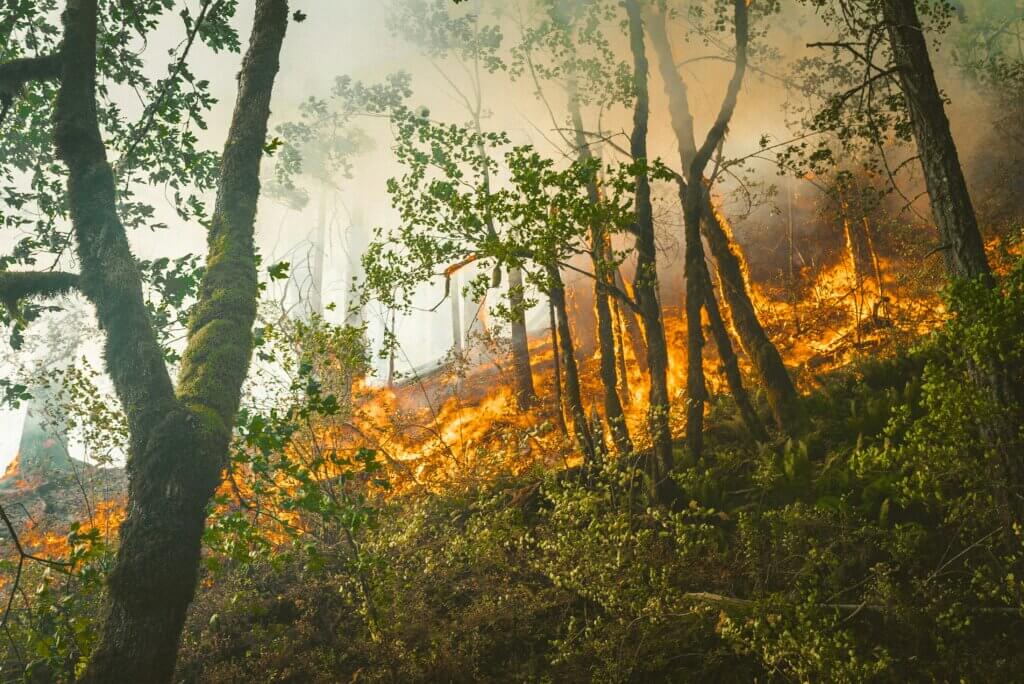
Forest fire smoke comes from burning trees, brush and vegetation, and while we might think it’s safer, there are still a lot of reasons to be concerned. Over a forest’s lifespan, trees absorb and store atmospheric pollutants, including heavy metals like lead, cadmium and mercury, pesticide residue, decades of industrial fallout that settled into bark and leaves and never left. A widely cited Australian
study found the lead released during Sydney bushfires still carried the isotopic signature of leaded gasoline burned decades earlier. The forest had been storing it the whole time. When it burns, that stored pollution comes back out, along with the fine particulate matter that inflames your lungs and your brain. A forest fire today is not the same event as a forest fire before the industrial age.
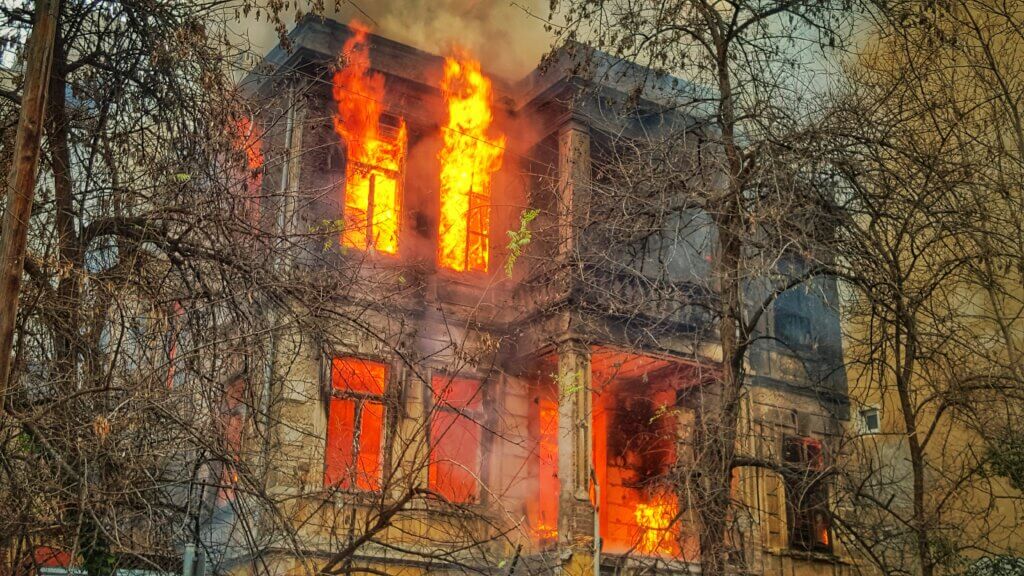
But when a fire tears through a neighborhood, a shed, or an apartment complex, it’s no longer just burning wood. It’s burning couches, carpet, vinyl siding, electronics, treated lumber, PVC pipe, paint, pesticides stored in garages, and lithium-ion batteries, multiplied across an entire neighborhood or district. Older homes may release
lead, asbestos or PCBs that had been sealed away for decades. When plastics and synthetic materials burn at that scale, they can release cyanide and dioxins, chemicals considered among the most toxic substances known, into the air an entire city is breathing. That’s why so many people describe wildfire smoke that’s moved through a town as smelling like plastic.
Why Does This Hit Some of Us So Hard?
Why do some people barely notice a smoky sky while others feel like they got hit by a truck?
Because not only are our exposures different, but so are our habits, and lifetime exposures. If you already carry inflammation, or a toxic load, whether from chronic illness, autoimmune issues, unresolved trauma, or a nervous system that’s been on high alert for years, bad air adds fuel to a fire that’s already burning inside you.
Why would unresolved trauma or an unregulated nervous system make you more vulnerable to smoke? Your ability to clear toxins depends on being in a parasympathetic state, the rest-and-digest mode where your liver, digestion and detox pathways get the blood flow and resources they need. If your nervous system has been stuck in fight-or-flight for years, from trauma, chronic stress or a body that never fully learned how to power down, that detox machinery doesn’t run the way it should.

Your habits affect your ability to detox as well. One study found that wildfire smoke combined with disrupted sleep raised heart rate and blood pressure more than the sum of their individual effects. Even a single night of poor sleep has been shown to raise inflammatory markers in the blood, which means walking into a smoke event already sleep-deprived leaves your body
fighting on two fronts with fewer resources. Regular exercise, on the other hand, appears to build resilience over time by improving your body’s antioxidant and immune response to pollution. And your antioxidant intake matters as well.
What we can do to protect ourselves
While there’s a limit to what we can do about the bad air, there are steps we can take to protect ourselves.
Watch the number, not the sky. A hazy sky and a dangerous AQI don’t always match. Check your local air quality index before you decide the day is safe for a walk or an open window.
Mask up when the AQI crosses 100, and make it an N95. A cloth mask does nothing against particles this small. This matters even more with structure fire smoke, given the extra synthetic chemicals in the mix.
Make sure you have the right air filtration If you have central HVAC, the EPA recommends a MERV 13 filter during smoke events, the highest rating most residential systems can handle, and running the fan continuously instead of on auto. But a lot of homes, especially older ones or those in the Northeast and Pacific Coast, don’t have central air at all. If that’s you, a portable air purifier does the real work instead, and it’s arguably the more important piece either way since it treats the air in the room you’re actually breathing, particularly wherever you sleep. Look for one with both HEPA and activated carbon. HEPA traps the particles, but it does nothing for gases, and activated carbon is what actually captures the dioxins, cyanide and VOCs from burned synthetics that I mentioned earlier. Most higher-end purifiers marketed for wildfire smoke already include both, so it’s just something to check on the label. For your car, upgrade to a HEPA or activated-carbon cabin air filter, keep your windows up, and use recirculate mode when smoke is heavy.
Load up on antioxidants during smoke events. Researchers have found that antioxidants directly counter the oxidative stress PM2.5 causes in the body, including in the brain. Diets higher in fruits and vegetables have been shown to reduce the respiratory harm from PM2.5, and in animal studies, daily vitamin C measurably protected neurons from PM2.5-induced damage. Eat the rainbow of colors from natural foods. Each color comes from a different phytonutrient family, and each one supports your immune system and your body’s own detox enzymes in its own way. The more colors on your plate, the easier it is for your body to handle bad air. If you want an easy way to get a variety, consider Zena’s superfood organics with 70+ superfoods.

Clean When a large fire has burned through hundreds or thousands of structures within roughly six to ten miles of you, don’t just air the place out. Clean it out. Dioxins and fine soot from burned synthetics settle into carpets, upholstery and HVAC filters and keep off-gassing for weeks. Wipe surfaces, change your filters, and consider a professional smoke-remediation cleaning if a fire of that scale burned within that range of you.
Take the fatigue seriously If you’re dragging during a smoke event, that’s your brain and body under a measurable biological load. Take the master antioxidant glutathione, and get your antioxidants. Make sure you get plenty of rest, and take naps if you need to support your detoxification systems.
Get support if it’s not lifting. For some people, especially those with existing health struggles or a nervous system that’s already depleted, the fog and fatigue linger well past the smoky days. If that’s you, it’s worth having someone look deeper at what’s going on in your brain and body, not just wait it out.
The Bottom Line
We are breathing more compromised air more often, than we used to. But you’re not powerless in it. Understanding what’s actually in that smoke, and how it’s impacting your health is the first step. If you’ve been feeling foggy, exhausted or “off” and you can’t fully explain why, even outside of fire season, I’d love to help you get to the root of it. Consider getting my intuitive Holistic Health Assessment to learn more your about your inflammation levels, oxidative load, ability to detox and more. You deserve to have the health and life you love!