

We had been traveling around to the beautiful small towns of LiJiang and Dali in China and then headed to Cheng Du. My sister and her husband were living there at the time and we planned to stay there for a few days to see its best features and prepare for our trip to Tibet.
I remember I became unusually fatigued shortly after I arrived. I usually have plenty of energy and am always eager to check out what each new place has to offer. But after arriving in Cheng Du, I didn’t want to do anything except stay in their apartment and sleep. But Cheng Du is known for is its panda reserves and it was the one thing that motivated me to get out of their apartment.
I remember as we arrived closer to the reserves, my energy

started to come back. By the time we got to the reserves, I felt like myself again! I had a feeling that it had something to do with the air. Chengdu is a polluted city where much of the population walks around wearing a mask. The panda reserves was a big park full of trees, and the air quality was infinitely better! As expected, when we left my energy dropped as we got farther and farther away from the reserves.
I was struck by the clear and obvious difference in air quality and the immediate impact that had on my health. If air quality could have such short-term effects, then what was the impact of chronic exposure of air pollution on our long-term health?
While we’ve known for a while that air pollution increases our risk for respiratory diseases, I wanted to know how it impacts our brains. Thus I was excited to find that colleagues in epidemiology had finally found good ways to measure air quality and were folding that analysis into large-scale studies.
Evidence for the detrimental effects of air pollution and brain damage has been growing.
The bulk of the work is in examining the effects of early life air pollution and brain damage is in developmental disorders, and the impact of air pollution on Alzheimer’s disease.
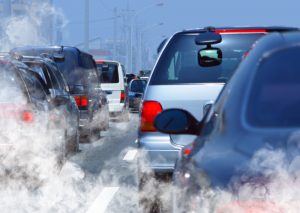
When looking at air pollution, particle size matters. The EPA had not been able to measure the most damaging, ultrafine particle sizes (PM2.5) until recently. But the ultrafine particles come into our bodies through our nasal passages. Because they are so fine, the cilia in our nose doesn’t filter them out,and so they enter straight into our brains.
Breathing in ultrafine particles damages our nasal epithelium. Interestingly, one of the first symptoms that develops with Alzheimer’s disease is a loss of smell.
Another reason why the ultrafine particles are so damaging is because the smaller they are, the more they cause oxidative stress. Oxidative stress creates free radicals which damage proteins, lipids, and DNA, our mitochondria, and increase inflammation. Free radical damage is the primary mechanism that causes our bodies to age and it increases our susceptibility to most diseases.
So how do these ultrafine particles damage the brain?
Increased risk of stroke:
Several studies have now shown that there is a increased risk of cardiovascular diseases, including stroke, with increasing air pollution. This is understood to be due to the increasing oxidative damage to the vasculature caused by the ultrafine particles.
1 Increased risk of Alzheimer’s:

A study conducted out of University of Southern CA showed that for people living in places above the EPA limit for ultrafine particles, the risk of dementia doubled in women. Those with a genetic variant of the Alzheimer’s disease risk factor, APOE4, were disproportionately affected.
In the Nurses Health Study with 19,000 women, showed that the more fine particles they breathed, the faster the rate of cognitive decline.
The Framingham Heart Study showed that the closer their subjects lived to a roadway, the smaller their cerebral brain volume.
Another study from University of Southern CA showed that the more ultrafine particles they breathed, the less white matter. The white matter parts of the brain are responsible for intracortical communication.
Consistent with the human studies, mice that breathed polluted air, had increases in neuropathological hallmarks associated with Alzheimer’s disease, including increases in cytokines, toxic Aβ, and atrophied neurites.
2 Air pollution and brain damage in the womb:
Researchers looked at polycyclic aromatic hydrocarbons (PAHs) which are found when organic materials are incompletely burned, including oil, coal, waste, and wildfires.
PAHs measured in the womb or in the 1st yr of life are associated with increased risk of ADHD, anxiety, depression, low IQ, and more conduct disorder. They have been shown to be correlated with reduced white matter, reduced processing in those areas of the brain, and slower reaction times.
Higher levels of pollution from traffic in the womb and 1st year have also been shown to be associated with an increased risk of autism.
Similarly, developing mice exposed to rush hour traffic pollution had larger cavities in their brains, which is associated with autism and schizophrenia.
So now that we know that air pollution is detrimental to our lungs and our brains, what can we do about it?

1. Make sure you get plenty of anti-oxidants to soak up the free radicals. Eat at least 5 servings of fruits and vegetables a day, and make sure you get a variety.
2. Take a glutathione supplement or N-acetylcysteine. Glutathione is our master anti-oxidant. We have a lot when we are young, but we lose it with age. Taking glutathione can help reduce or even eliminate many problems associated with aging. It helps you recover faster from illness and injury and gives you more energy. Talk to your healthcare provider about the type of glutathione that will work for you.
3. Reduce your exposure to pollution. Try to live farther away from busy roadways. Plant trees where you can. We can be exposed to indoor and outdoor pollution. Get a high quality air filters for inside your house and an air filter for your car.
4. Fight for clean air. Contact your representatives, march in protests, encourage divestment from the fossil fuel industry, and help raise awareness by sharing this article. Let’s fight for clean air like our life depends on it! Why? Because it does!
Are you concerned that exposure to toxins or pollution might be affecting your health? I regularly help clients figure out how toxins have impacted them, and together with the use of the Body Code and Vibrational Medicine, we release them. If you’d like to learn more about how I might facilitate your healing journey, contact me to schedule a complimentary consultation.
1The Polluted Brain, Science Magazine.
2Air Pollution May be Damaging Children’s Brains – Before They are Even Born