

About Dr. Tina
Why I became a Holistic Brain Health Practitioner
Even though I’ve been able to help hundreds of clients find relief from symptoms they never thought could change, for the 1st half of my life, I struggled with learning disabilities, severe stomach pains, depression and anxiety. My ailments and concerns were either dismissed by doctors, or inadequately addressed, or I was told I had to just accept my limitations. This was fueling my depression and despair, and so 3 decades ago, I decided for my own mental health, that I had to refuse to accept their limitations. I decided that if they didn’t have answers, I had to find them. It was my only hope!
I studied mechanisms of action and root causes in the fields of neuroscience at the University of Rochester and psychiatric and nutritional epidemiology at Johns Hopkins and Tufts University.
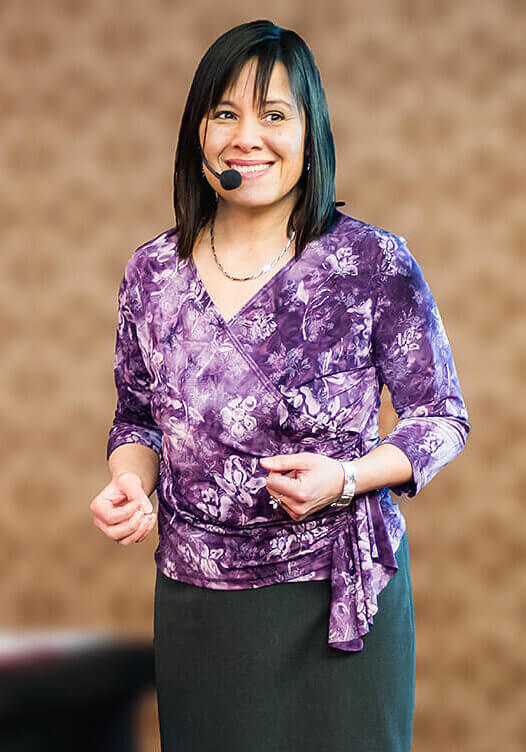
I started my business as a holistic brain & trauma recovery practitioner over a decade ago when I realized that I could help clients address their root causes quickly and efficiently with my intuitive skills.
At Peace with Being Different
Much of my life I’ve felt like an outsider due to cultural differences, unique learning challenges, and a perspective that seemed entirely unique.
For years I took rejection personally, until I realized it wasn’t about me. It was our culture. Most groups and institutions in America favor conformity and compliance. They aren’t comfortable with women who ask questions and think outside the box.
I believe many people who feel ostracized by their communities aren’t inferior or bad people, but they’ve been pushed out of environments that weren’t built to handle differences.
The spirit of wabi-sabi helps give me peace. With this mindset, I am reminded to always expect change and to see beauty, wisdom, and growth in what makes us human, imperfect, and continually evolving.
I help misfits like me release the trauma of societal rejection, release barriers that interfere with their ability to thrive, celebrate their unique gifts and embrace a healthy perspective.
Institutional, Cultural & Environmental Trauma
Another defining chapter of my life came through severe environmental illness caused by toxic mold, and a water damaged building resulting from negligence, and systemic failures within the mold and housing industries.
I faced years of extreme symptoms, displacement, loss of stability, financial hardship, and the terror of not being believed — all while navigating organizations that downplayed serious harm, denied responsibility, and shifted blame.
But this wasn’t my first encounter with institutional and cultural trauma.
I've also experienced trauma within family dynamics, social groups, work environments, and communities where the authority of those in charge, and conforming were prioritized over truth, safety, and well-being.
Upon hearing about slavery, the holocaust, the internment of the Japanese, and more as a young girl, I've been horrified by what large swaths of our society can do to inflict trauma on vulnerable populations. I have been passionate about understanding how and why cultures inflict trauma.
Today, I see patterns from these horrific periods of history unfolding in our culture, where many people feel dismissed, polarized, unsafe, and powerless within institutions meant to protect and serve — and where trauma is often deepened when those entrusted with care and responsibility fail to act.
I’m passionate about helping clients recognize these patterns, release the trauma they carry, and reconnect with inner peace, clarity, wisdom, and personal agency.
Toxic relationships
For much of my life I couldn't understand why I kept attracting toxic relationships. It forced me to study sociopathic personality types and patterns, and best methods for minimizing their impact. I also realized that at the core of it, I was valuing their feelings more than my own, and that I had to learn to love and defend myself in the same way I would anyone I treasured! I can recognize toxic behaviors more easily, and minimize their impact on me. Now that I've done the deep work, I'm happy to say that is not a pattern that continues to haunt me, and I'm passionate about helping others through this journey.
More than a Holistic Brain Health practitioner...
Outside of my work, I love learning, reading, meaningful conversations, civic engagement, creative projects, staying active through running, dance, strength training, and yoga, and caring for 3 cats, 1 bunny and a tortoise who bring both mischief and joy.
My mission:
My mission is to help people who feel different, dismissed, wounded by relationships, or harmed by broken systems heal trauma, rewire their brains, and create the health and life they love.
Dr. Tina's Publications and More
- 2024 Yocale business award recipient
- Postdoctoral Fellowship grant (8/2004-8/2005)
Charles A. King Trust Postdoctoral Research Fellowship Program - Alzheimer’s Association travel award (7/2004)
- Technical Assistance Workshop travel award (11/2002)
Grant writing workshop with the National Institutes of Aging - Individual Predoctoral NRSA (7/1999-7/2001) (F31 NS10910-01)
National Institute of Neurological Disorders and Stroke - Graduate Student Society travel award (1997)
- Huang, T.L. (2010) Omega-3 fatty acids, cognitive decline and Alzheimer’s disease: A critical review and evaluation of the literature. J Alzheimers Dis. 21:673-690.
- Huang, T.L., Carlson, M.C, Fitzpatrick, A.L., Kuller, L.H., Fried, L.P.,
Zandi, P.P. (2008) Knee Height and Armspan: A Reflection of Early Life Environment and Risk of Dementia. Neurology 70:1818-1826. - Huang, T.L., Yu, W.W. (2008) Weight Loss Occurs over a Decade Prior to Dementia Diagnosis: Comment on Meta-analysis of Obesity as a Risk Factor for Dementia and its Subtypes. Obesity Reviews 9(6):631-2.
- Huang, T.L., Charyton, C. (2008) A Comprehensive Review of the Psychological Effects of Brainwave Entrainment. Altern Ther Health Med 14(5):38-50.
- Qiu WQ, Sun X, Selkoe DJ, Mwamburi DM, Huang T, Bhadela R, Bergethon P, Scott TM, Summergrad P, Wang L, Rosenberg I, Folstein M. (2007) Depression is associated with low plasma Abeta42 independently of cardiovascular disease in the homebound elderly. Int J Geriatr Psychiatry. 22(6):536-42.
- Huang, T.L., Carlson, M.C., Zandi, P.P., Fried, L., Kuller, L.H., Fitzpatrick,
A., Burke, G.L., Tucker, K.L. (2005) Benefits of Fatty Fish for
Dementia Appear Stronger for Those Without APOE ε4.
Neurology 65, 1409-1414. - Huang, T.L., O’Banion, M.K. (2000) The pathological consequences of simultaneous glucocorticoid and cytokine upregulation: Implications for neuron survival. Recent Research Developments in Neurochemistry. 3, 93-104.
- Huang, T.L., O’Banion, M.K. (1998) Interleukin-1β and Tumor Necrosis
Factor-α Suppress Dexamethasone Induction of Glutamine Synthetase in Primary Mouse Astrocytes. J. Neurochem. 71, 1436-1442.
- Huang, T.L. (2009) Fish, omega-3 fatty acids and Alzheimer’s Disease: A critical review of the literature. Invited talk at Sherbrooke University, Quebec.
- Huang, T.L. Ph.D., Tangney, C.C., Ph.D. Li, Hong, MS., Kwasny, M., Ph.D., Morris, M.C., ScD (2009) Epidemiologic Evidence of Antioxidant
Nutrients and Brain Health 2009 International Berry Health Benefits Symposium, Monterey, CA. - Huang, T.L., Charyton, C. (2008) A Comprehensive Review of the Psychological Effects of Brainwave Entrainment. ISNR, San Antonio, TX.
- Huang, T.L., Carlson, M.C., Zandi, P. P., Fried, L.P., Kuller, L.H., Fitzpatrick,
A.L., Burke, G.L., Tucker, K.L. (2005) Benefits of Fatty Fish on Dementia Risk Are Stronger for Those Without APOE ε4 SER-CSEB
2005 Joint Meeting: Epidemiology without Borders. PN 310. - Huang, T.L., Carlson, M., Fried, L., Fitzpatrick, A., Kuller, L.H., Burke, G.,
Zandi, P. (2004) Height, Armspan and Knee Height: A Reflection of
Early Life Environment and risk of dementia 9th International Conference on Alzheimer’s Disease and Related Disorders, Philadelphia, PA Abstr. P3-106. - Huang, T.L., Zandi, P., Lyketsos, C. (2002) Exploratory Analysis of Risk Factors Associated with Psychiatric Subtypes of Alzheimer’s Disease, NIA Technical Assistance Workshop.
- Huang, T.L., O’Banion, M.K. (2000) NF-κB Expression in Primary Mouse
Astrocytes. Society for Neuroscience Annual Meeting, New Orleans,
LA. Soc. Neurosci. Abstr. 26:1898. - Huang, T.L., O’Banion, M.K. (1999) Mechanisms of Glutamine Synthetase
Regulation by Glucocorticoids and Cytokines. Society for
Neuroscience Annual Meeting, Miami Beach, FL. Soc. Neurosci. Abstr. 25:2278. - Huang, T.L., Coleman, P.D., O’Banion, M.K. (1997) Interleukin-1β
Suppresses Dexamethasone Induction of Glutamine Synthetase in Primary Mouse Astrocytes. Society for Neuroscience Annual Meeting, New Orleans, LA. Soc. Neurosci. Abstr. 23:73.
TEACHING EXPERIENCE:
- Meetup Organizer and Instructor, Greenlake Goal Setters with EFT
(6/2012-current) - Guest Lecturer, Health Psychology, University of Victoria (3/2011)
- Tutor in Biology & Neurobiology (Fall, 2011)
- Group Exercise Instructor (2003-present)
- Course Director for Nutritional Epidemiology Journal Club (2003-2005)
- Bodylink Intern Maryland Museum and Science Center (2002-2003)
- Guest lecturer, Epi. of Mental Disorders Johns Hopkins U. (11/ 2002)
- Teaching volunteer, STARS program Johns Hopkins U. (2002)
- Summer Science Camp Counselor U. of Rochester (1998, 1999, 2000)
- Teaching Assistant, Undergrad Neuroscience Lab, U of R (Spring, 1996)
JOURNALS REVIEWED FOR:
Associate Editor for Journal of Alzheimer’s Disease, Journal of Gerontology: Psychological Sciences, Neurobiology of Aging, Acta Psychiatrica Scandinavica
INDUSTRY EXPERIENCE:
Xilinx, San Jose, CA
Software Engineer (1991-1993)
LEADERSHIP/COMMUNITY INVOLVEMENT:
- Professional Network Association Member (1/2015-present)
- Story Teller at Fresh Ground Stories (5/2014-present)
- WAmend volunteer (2014-present)
Hiking Leader at Seattle Outdoor Adventurer Meetup (9/2014- present) - Treasurer for ImprovMasters (Toastmasters) (7/2015- present)
Contest Chair for Humorous Speech - Contest, Toastmasters (8/2013)
- Member of Toastmasters, Chamber Club 540 (2012-present)
- Leader & facilitator of Greenlake Goal Setters with EFT Meetup (2012-present)
- Amnesty International Group 127 Treasurer (2010-2011)
- Organized Bike to Work Week for Rush Oak Park (2009)
- Served on Environmental Stewardship Committee at Rush Oak Park (2009)
- Amnesty International Group 133 Treasurer (2008)
- Amnesty International Group 133 Get-on-the-Bus Coordinator (2006-2007)
Led and organized workshops for student retreats (2000-2001) - Graduate Student Society Sojourner House Benefit coordinator (1998)
- Graduate Student Society Representative (1997-1999)
- Invited and organized visit for neuroscientist Dr. Robert Sapolsky (1998)