

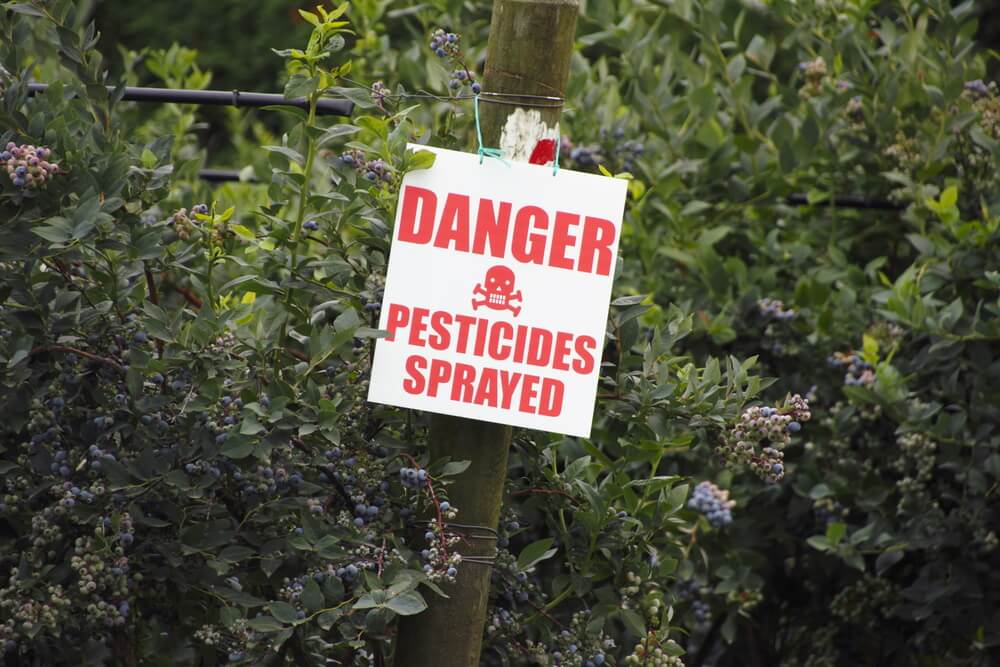
Last month I wrote about how Roundup nearly killed my cat.
As I mentioned, her exposures were in my front yard, even though we don’t use Roundup, and there was only a tiny section of yard that I could put her (on a leash) when she wanted to explore the great outdoors.
But after writing that piece, I realized that the greens in my garden in my raised flower beds did not have Roundup, and were safe for me to eat. And these raised flower beds were in line of how the Roundup could waft into my yard.
So I got curious. Why were my greens in my raised flower beds free of Roundup, when the ground around it wasn’t safe for her? And then I started to wonder if some groundcover weeds were accumulating Roundup more than others, and I got a yes!
Turns out it was the sticky weeds!
We have this weed called cleavers that is a part of the ground cover in my front yard. It can stick to my shoes if I walk in it, to me if I pick it up, and it has somehow followed me (on my clothes) into house at various points. It is rather clingy.
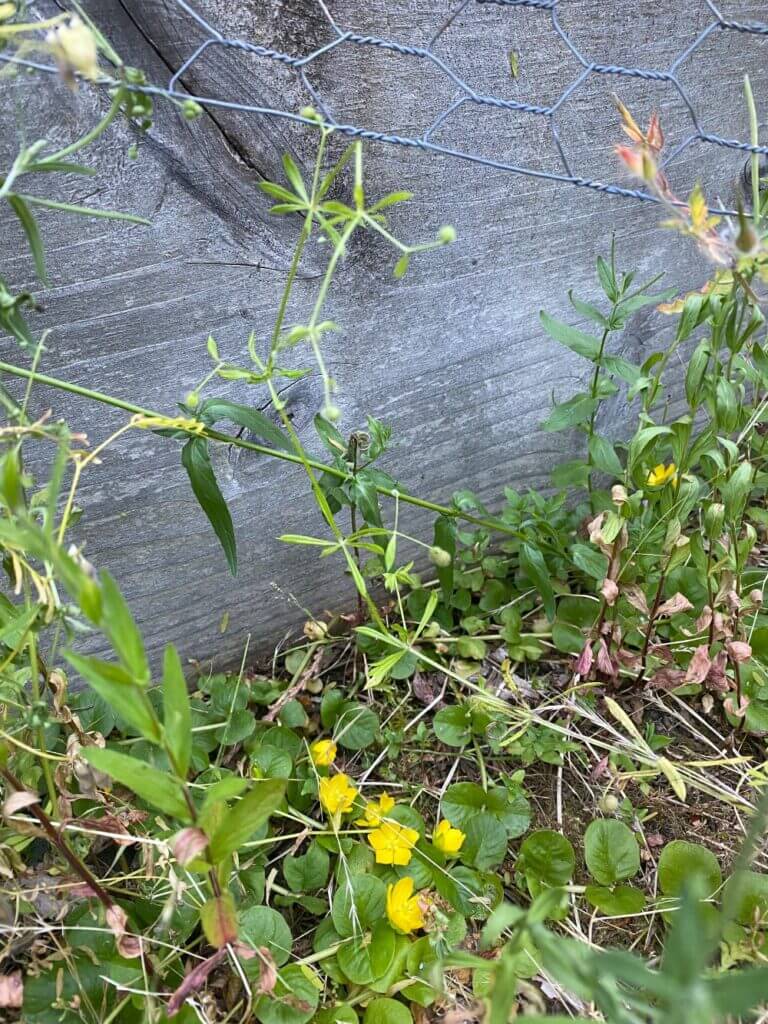
I first learned about cleavers on an herbal walking tour that I took, and we had fun throwing the plant at each other’s clothing and watching it stick.
But I was now more concerned. Was the stickiness of the plant causing toxins like Roundup and pathogens to accumulate in the plant?
I had read that Roundup can induce a gut dysbiosis that allows the takeover of Clostridium (a toxic bacteria) in the gut, (which is what happened to Tuk Tuk). But how I wondered, does the Clostridium get there in the first place?
What does the literature say about toxins in sticky plants?
So I started searching the literature for Roundup and Sticky plants, and Clostridium and sticky plants.
And I found this article on mechanical contact dermatitis that you can get from various types of sticky plants.
And deeper in the article it says,
“An often overlooked comorbidity of mechanical dermatitis from plants is the introduction of infectious organisms into the skin and subcutaneous tissue. Bacteria such as Clostridium tetani may be introduced by spines and thorns.”
And suddenly it made sense. According to my intuitive read, the sticky plants had clostridium (which is a toxic by-product of mold). We had plenty of rain in the spring, which can foster the growth of mold, which in turn could have very easily caused an accumulation of clostridium in sticky plants.
And because the plant is so sticky, exposure to Roundup, other pesticides, or toxins could accumulate in the plant and foster the growth of clostridium!
Tuk Tuk had had multiple exposures to Roundup. In her last exposure, I was at that point aware of the dangers of Roundup in our yard (but not of the link with sticky plants), so I took her to a Roundup free section of the yard. But while I tried to carry her back to the apartment, she wiggled out of my arms. I thought, ok.. I’ll let her walk back to my door, but she took just one whiff of a sticky plant, and I realized she had been exposed!
The dangers of toxins in sticky plants like Roundup and Clostridium
I immediately scooped her up and carried her into the house. That one whiff caused gut dysbiosis, and Roundup to accumulate in her nasal and whisker passages! And 3 days later she had an increase in deposits in those same areas! I was horrified by how little it took to have such a strong effect!

I can’t say that will happen for every animal that is exposed to toxins in sticky plants. Her nasal and whisker passages at the time were in bad shape. And she was quite vulnerable to picking up pathogens and toxins. However, much of what caused this issue in the first place was due to the toxic combination of Roundup & Clostridium.
After I realized that the danger was in the sticky plants, I looked through the groundcover and pulled out all the cleaver I could find. I found several larger bundles of it (see picture), and took one of them out, and decided that I needed a break.
I went inside to get a drink of water, and realized that I now had RoundUp in my system and gut dysbiosis and that I needed several capsules of my probiotic! I had been wearing gloves and wasn’t sniffing it in the way a cat does, but I still had to detox from the Roundup just by pulling it out!
I had to take my probiotics with food. As I was preparing my dinner, I noticed that it was slowly replacing my good bacteria with a quickly growing percentage of clostridium! My gut reached 43% clostridium within 15 minutes of exposure! And by the time I had enough food in my stomach I needed 7 capsules of my general probiotics and 5 of my Immune Defense probiotics! I normally just need one of each per day!
I had to find a way to make the sticky plants safer before I pulled them out!
I ordered a probiotic spray which I had planned to spray on the remaining cleavers before I pulled them. But when the spray finally came, I found that the larger bundles of cleaver plants were gone! I had mentioned my concern about sticky plants to my landlord, and he had pulled them when he pulls weeds on my side of the house.
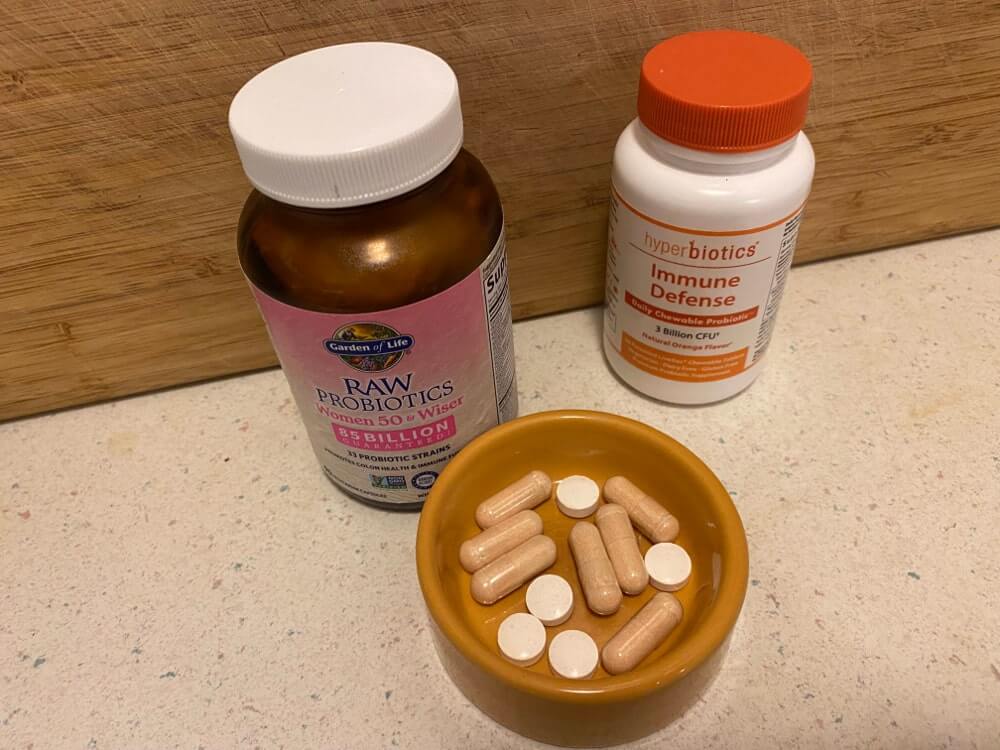
(What I needed and how much was based on my own intuitive reading for me with that particular exposure. Please consult a professional if you think you have been exposed.)
When studying epidemiology, we learned about the “sentinel chicken”. If public health officials want to screen for particular epidemics, like the West Nile virus, they will place a chicken in the area, and monitor its response to determine if the virus is in the region.
I started to wonder, can sticky plants serve a similar function? If pathogens and toxins accumulate in sticky plants, can they give immunologists and toxicologists a way to measure the health of the surrounding air?
I don’t know.
This story isn’t meant to convince you that sticky plants are dangerous. At this point, it merely serves as a launching point for some interesting research. I suspect that sticky plants could harbor healthy as well as unhealthy microbes, depending on the environmental milieu. But this is only a hypothesis.
I’m hoping that a young scientist looking for a thesis project might find this story interesting enough to run some experiments. This could lead to some fascinating research! The research scientist in me would love to brainstorm with any qualified scientist with access to a lab, who might want to determine if sticky plants are the sentinel chicken of the plant world.