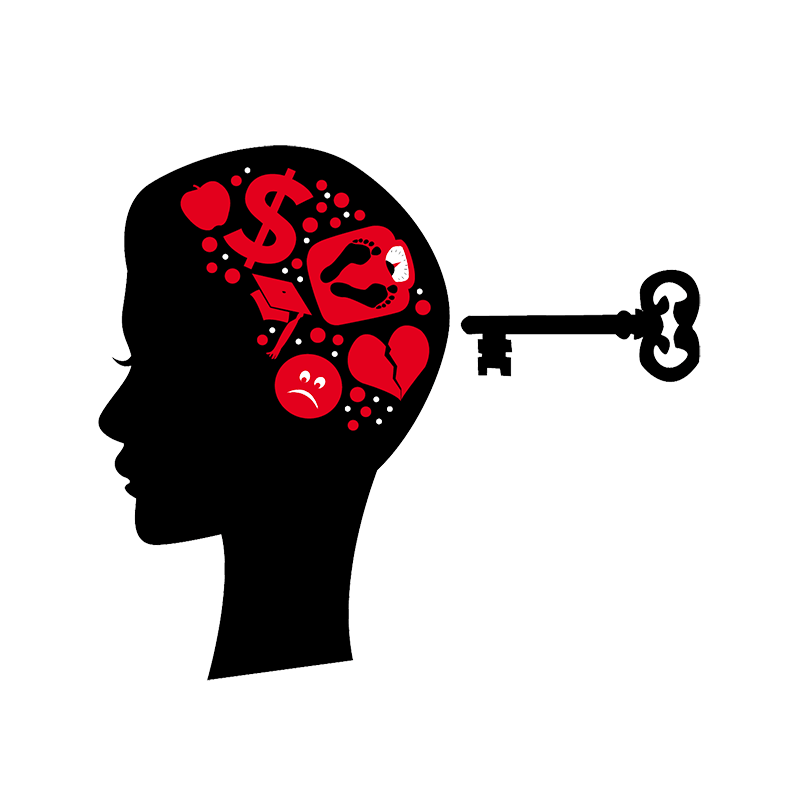


Have you ever struggled with a health issue, one where the doctors can’t figure out what’s going on?
This was a regular problem for me when I sought help from Western medical practitioners. My concerns were dismissed so much (even while getting a Ph.D. in Neuroscience) that I lost faith Western medicine would be able to do much for people like me.
For the last few decades, I’ve searched for root causes of problems to find effective means to address them. When I found Dr. Bradley Nelson’s the Body Code, I finally had a method that would help me achieve my goals. And I’ve been using it for over 10 years to deal with my unsolved healing mysteries, those of my cat’s, and my clients.
I’ve also been picking up aspects of Chinese medicine, functional medicine, health coaching, learning about fascia, and more to incorporate into my practice.
In doing this I’ve helped many clients with issues Western medicine couldn’t solve. I’ve also gained a new perspective from approaching problems from multiple viewpoints.
So, here are my 5 reasons that Western medicine can’t address mystery illnesses:
1. A dependence on limited sensory systems
Western medicine only seems to recognize what the mainstream sees and hears. But as the Neurologist Oliver Sacks so eloquently wrote about his patients, and Jill Bolton Taylor mentioned in her book My Stroke of Insight, brain injuries can open portals to new ways of experiencing the world. We don’t all perceive things in the same way. Just because someone feels or intuits something most people cannot doesn’t mean it isn’t true. It might mean there is something different about their brains that allows for higher perceptive abilities in a particular domain.
And, as we learn more about the sensory systems of animals, we realize how our perception is limited. For example dogs can detect cancer, Parkinson’s disease, mold, truffles, Covid and more with their heightened sense of smell. Plus there are other sensory systems that we can’t relate to that exist in the animal kingdom. The platypus uses electroreception, bats use echolocation, snakes can detect infrared radiation, and bees can sense the earth’s magnetic field!
The experiences of people who can smell, hear, see or sense things that most of us can’t, warrant curiosity, not condemnation.
2. Problems might not fall into a discovered diagnostic box

In my experience, if the problem didn’t fall into a discovered diagnostic box, especially if you’re a woman, your viewpoint is more likely to be dismissed. I wish I had had doctors that approached my issues with curiosity and and the desire to learn more. Just because something isn’t recognized yet, doesn’t mean the patient is making it up.
Luckily, there are doctors that do consider other perspectives. I just wasn’t fortunate to meet them when I needed them the most.
3. Ignoring the fascia
My neuroscience program in graduate school at the University of Rochester, involved taking neuroanatomy with the medical students. In the labs, we’d start with the brain and spinal cord, but ignore, and almost entirely dismiss the meninges (a goopy, cobweb-like mesh that surrounds the brain). You see this frequently in medical dramas when surgeons go straight for the heart, cutting the goopy cobwebby stuff like it didn’t matter – but it does. The stuff surrounding and even imbedded in organs, glands and tissues is the fascia (called meninges in the brain), and it’s there for a good reason.
The fascia is there to maintain our body’s structures and help to provide support for muscles and joints. It has sensory and mechanoreceptors which help us with proprioception (detecting where our body is in space). It’s piezoelectric properties pick up frequencies (like from the earth or EMFs) to which our tissues might respond to. The Chinese medical perspective is it helps provide vital force energy supporting the tissues – an essential life force that keeps them going. The fascia even have lymphocytes (immune cells) which help the fascia clear toxins and pathogens that get caught in their web.
Unhealthy fascia can be dry, have restrictions, adhesions, distortions, be torn or infected. If Western practitioners can’t figure out why you are in pain, the clue could be an issue with the fascia.
4. Ignoring the energy systems, the meridians, chakras and aura
The meridians (energy channels used in Chinese medicine) are also in the fascia! So, if Western medicine dismisses the importance of things they can’t see like the fascia, they will also miss the meridians. Meridians, chakras and auras can be seen with a variety of complicated instruments that admittedly I don’t understand. Luckily, Dr. Beverly Rubik is an expert in measuring the biofield (aka subtle energies) and you can learn more about how she, and others, do this in her fascinating talk here.
5. Trauma in the tissues
I was first drawn to the Body Code by Dr. Bradley Nelson’s Emotion Code, which champions the idea emotions can be trapped anywhere in our bodies. Since then, I’ve come to realize our tissues, when traumatized, can develop their own issues. They can be disgusted with being constantly attacked and feel vulnerable, or they can feel hopeless about their ability to recover or do their job. In autoimmune diseases, the immune system is often attacking tissues it perceives to be dangerous. This usually starts when tissues become dangerous due to being infected with toxins or pathogens, but can continue if the original physical cause is gone.
Healing is more complete, when you address the trauma, and the issues in the tissues.
What does this mean for healing?
Addressing these points (and more) has helped me resolve issues that my clients haven’t been able to via other routes. Clients come to me with neurological pain, tingling, vibrations, neurodegenerative diseases like early stage Alzheimer’s and Parkinson’s, head injuries, headaches, epilepsy and more.
In fact, my favorite problems to tackle are the rare or unsolved!
In March of this year (2021), my healthy 17 year old cat was struck with a myriad of serious health crises that could have easily been fatal. It started with mold exposure, Roundup (drifting in from elsewhere), mites and worms. And while I can’t officially diagnose, she had all the signs and symptoms of systemic autoimmune disease, Alzheimer’s, non-Hogkin’s lymphoma, maple syrup urine disease, and 3 unrelated tumors. Plus, she suffered issues with her right lung, brain, nasal passages, all of her sensory systems, paranoia around elimination, eating and drinking, right kidney and liver, immune system, skin, digestive system, elimination pathways and tons of PTSD. She went from being chronically overweight to chronically underweight. But after spending many hours addressing her issues, she is at least 90% recovered both physically and mentally.
So, if you know anyone with an illness that has not been solved with Western medicine, share this article with them so they can consider the alternatives.
And if this helps you with a breakthrough on your path to wellness, be sure to contact me and let me know! I’d love to celebrate that with you!