


In the Book Behavioral Investing, Daniel Crosby says that one of the biggest barriers to making sound financial decisions for our future is our ego. When it comes to the stock market, many people buy stocks without understanding the market, or what makes a good investment.
Why?
We are subject to the bias Daniel Kahneman, author of Thinking Fast, Thinking Slow calls “What You See Is All There Is” (WYSIATI).
For example, when we meet someone new, our fast thinking brain forms an instant impression based on our previous experience of people who might resemble that person. All of our future interactions with this person shape how we see that person, but our revised perceptions of a person hardly budge in comparison to our initial impression.
The danger of WYSIATI in a pandemic
Because I was trained in epidemiology from Johns Hopkins Bloomberg School of Public Health, I see this bias in action regularly with responses to the coronavirus and public health practices.
A common argument I see is about the rate of infection or percentage of deaths. Many people who should know better, argue that since the rate of infection is so low, we shouldn’t risk our economy by shutting things down, or bother with social distancing.
But the basic flaw in the argument is that the rate of infections and deaths is not a static figure. It is highly dependent on whether the community is limiting transmission, through social distancing, wearing masks and vaccinations, or whether it’s ignoring public health protocols.

If we were ignoring the warnings, we could easily have many superspreading events. For example, in a nursing home in Belgium 40 out of 100 residents contracted the Coronavirus. If they had all gone to other large events of 100 people and spread the infection at the same rate, they could have easily triggered other superspreading events, resulting in 40×40 = 1600 cases.
Infections could continue to escalate exponentially if those infected continued to go to other large-scale events. This is how and why it’s so important to catch pandemics early and restrict their ability to propagate. Because if the virus has free access to hosts, it can be incredibly destructive.
The US has had 1900 deaths/million people. Taiwan has had 33 deaths/million people. Taiwan’s COVID response became the world’s envy, even though to date only 1.8% of their population has been vaccinated.
Best practices to prevent pandemics require that you prevent the disease from coming into your population in the first place. Taiwan has been strict with people entering their country, requiring COVID testing, and a 2-week quarantine where arrivals are tracked via their cell phones. Taiwan responds drastically, quickly and swiftly to any outbreaks, with stay-at-home orders. They have sophisticated contact tracing, and they give sufficient support to make sure people have what they need to quarantine. Plus, they have a population that has been through SARS, and understands the importance of wearing masks, and social distancing.
Too many people aren’t fully grasping how quickly a pandemic can spread, and that our behavior can have profound consequences. Why? Because of the bias, What You See Is All There Is. It’s easy to fall victim to misleading statistics if you don’t have the training required to question what you are reading or hearing. Part of the training to become a statistician or epidemiologist is learning about common biases that can lead us to draw inaccurate conclusions.
How to not fall victim to the WYSIATI bias
Stay humble and be open to learning, especially if you see that there are people with advanced degrees in the field. If there is controversy in the scientific circles, especially with something as important as the Coronavirus, make sure you listen to the right experts as well.
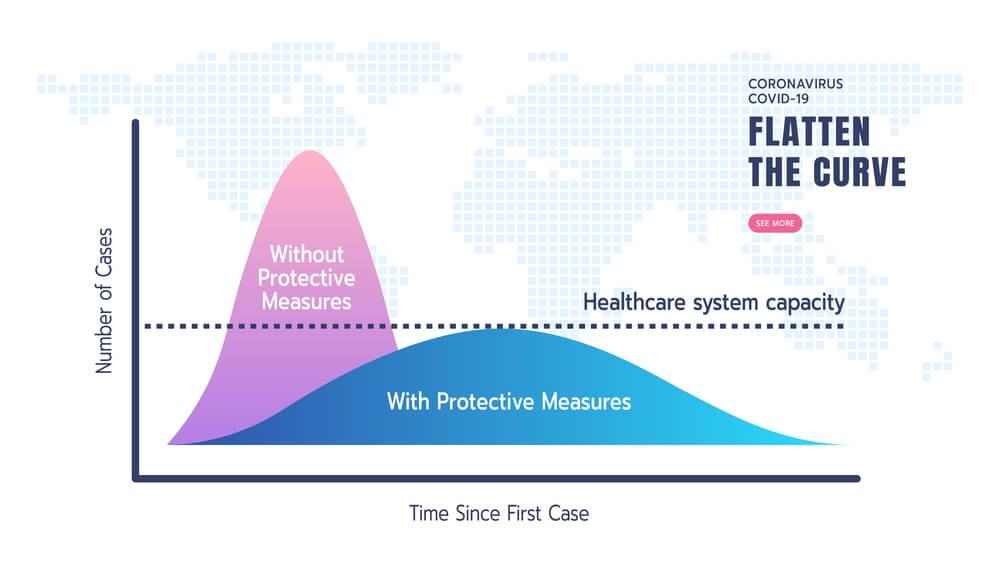
When it comes to determining the best public health policy, listen to epidemiology and public health experts. They have the optimal training to make the wisest recommendations. Epidemiologists track down the source of a pandemic in populations. They also track its spread in populations and they create the statistical models that are best at predicting future outbreaks. They primarily use statistical models to analyze patterns across populations.
Virologists are experts in the transmission of viruses and study how to stop their spread. They work in labs where they use microscopes to characterize the viruses or run experiments to determine how they are transmitted from person to person, or they might be trying to find medications that will help people fight viruses.
Microbiologists are similar to virologists in that they work in the lab, and study the same questions, but their expertise includes all types of organisms that cause infections. Including viruses, bacteria, fungi and algae.
Immunologists are experts in the immune system. So when it comes to COVID, they might be asking questions like, “Why can COVID have such a variety of responses with different people?” And, “What is different about their immune systems?”.
Doctors are often seen as experts. But if they don’t have training in epidemiology and public health (and many don’t), and if they have big egos, they can easily fall prey to WYSIATI.
Similarly, If you want to be a successful investor, the more you learn and study the market, investing strategies, and the companies you are interested in, the less you’ll be gambling. Being humble and willing to learn is of primary importance if you want to increase your chances of financial success on Wallstreet.
Want to know how to avoid being fooled by statistics? Take the great free University of Washington class on Youtube called “Introduction to Bullshit“. You can find the first lecture here:
Like this article? Sharing is caring! Click on the Facebook/Twitter/Linkedin Buttons to share it with your friends!